From a SWISSMAN DNF in 2024 to a SWISSMAN finish in 2025 and IRONMAN Portugal in 2026. Three years of stubbornness, questionable decisions, professional turbulence, family logistics, and a growing suspicion that the next challenge might need to look a little different.
Apparently, my blogging frequency is inversely proportional to the amount happening in my life.
The last time I wrote here, at the end of May, my shiny new CUBE Aerium was finally being assembled after a delivery saga that had lasted longer than some of my training blocks. I had rediscovered the benefits of systematic training, made some rather ambitious plans for the summer, and concluded with:
The bike is being assembled. The plan is being assembled. The athlete, frankly, is also being assembled.
Well, five months later, all three have survived their first major acceptance test.
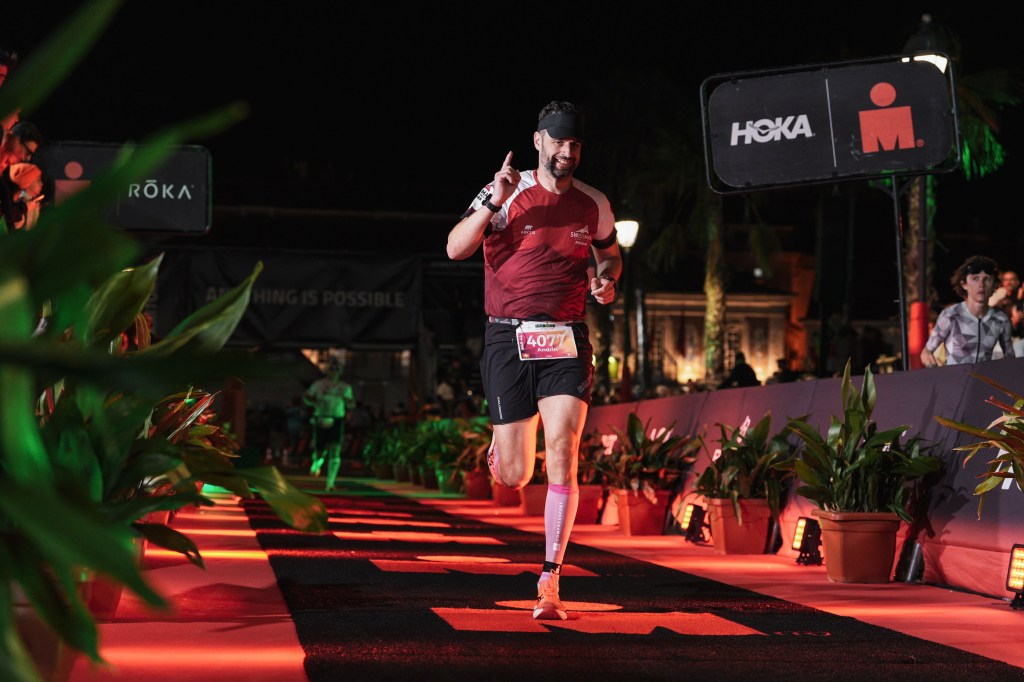
IRONMAN Portugal Cascais. October 17, 2026. 12:09:40.
I did it. I officially became an Ironman.
Which is a slightly strange thing to celebrate, considering that I had already finished SWISSMAN, arguably the more ridiculous of the two challenges, the year before. But there is something undeniably satisfying about finally earning that particular title. After years of endurance adventures, numerous races, and plenty of questionable decisions, I can now legitimately say: I am an Ironman.
And I’m genuinely happy about it.
But the story is considerably longer than those twelve hours on the Portuguese coast. In fact, looking back, the past three years have formed a rather peculiar trilogy.
2024: SWISSMAN DNF. 2025: SWISSMAN finisher. 2026: IRONMAN finisher.
Three years, two major finishes, a handful of setbacks, and quite a lot of life happening in between.
Time to fill the gaps.
2024: Apparently, wanting something isn’t sufficient preparation
2024 was another reminder that ambition and preparation are not necessarily the same thing.
I returned to SWISSMAN, a race with which I already had unfinished business, having made my first rather delusional attempt back in 2016. This time, I was better prepared, or at least I thought so. Unfortunately, the result was another DNF.
Not exactly the outcome I had imagined.
SWISSMAN isn’t particularly forgiving. Between the swimming, cycling through the Alps, thousands of metres of climbing, and the final mountain run, it has a fairly effective way of exposing whatever weaknesses you’ve brought to the starting line.
I had brought a few.
Still, there was something about that race I couldn’t quite let go of. The landscape, the challenge, the sheer absurdity of crossing Switzerland under your own power. More than that, perhaps, the knowledge that I hadn’t yet managed to put myself in a position where finishing was realistically possible.
Then, in autumn 2024, a series of bacterial infections pretty effectively dismantled whatever training momentum I had left. Fitness disappeared, consistency collapsed, and the prospect of returning to SWISSMAN in 2025 started looking rather optimistic.
Which, naturally, was precisely what I decided to do.
Because apparently, two unsuccessful attempts weren’t sufficient evidence that I should perhaps consider a more conventional hobby.
2025: SWISSMAN, unfinished business, and everything else
2025 became a year of rebuilding.
From a rather uninspiring starting point, I gradually worked my way back into something resembling serious endurance fitness. Long rides, plenty of climbing, running, swimming, and all the usual negotiations between training ambitions and everyday life.
Looking back, the amount of preparation I put into SWISSMAN was substantial. Not just physically, but mentally and logistically. Finding the time, maintaining consistency, recovering properly, and keeping the rest of life functioning required considerably more discipline than the race itself.
And then there was work.
Professionally, 2025 was anything but quiet. I had taken on a much larger R&D leadership responsibility at INFICON, right in the middle of considerable organisational changes. There were new responsibilities, new challenges, difficult decisions, and more moving parts than I could comfortably keep track of.
The training became both a challenge and an escape.
Long hours on the bike offered something that professional life increasingly lacked: a clearly defined objective, a reasonably predictable relationship between effort and progress, and the wonderful simplicity of having nothing more complicated to do than keep pedalling.
At work, you can spend hours discussing a problem and still not agree on what it actually is. On a mountain pass, the problem is usually quite obvious.
It’s uphill.
Keep pedalling.
Simple.
And somehow, despite the professional turbulence, the training worked.
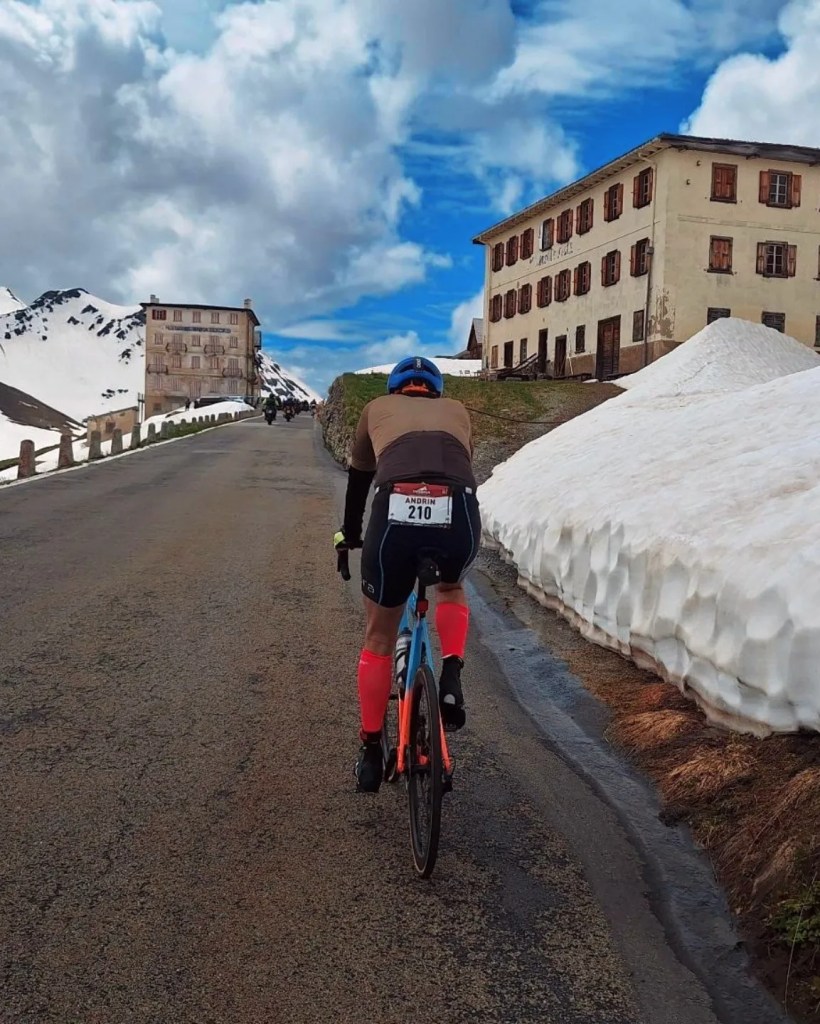
SWISSMAN 2025: 16 hours and 31 minutes, with more than 5,500 metres of climbing.
The swim was shortened because of conditions, a detail worth acknowledging, but the day was still an enormous undertaking. After years of trying, failing, rebuilding, and trying again, I finally crossed that finish line.
I had expected an explosion of emotion.
Instead, there was a peculiar quietness.
Relief, certainly. Satisfaction, absolutely. But also exhaustion, and the slightly disorienting feeling of having finally achieved something that had occupied a considerable part of my thoughts for years.
It was done.
And it meant a lot.
Meanwhile, the professional challenges hadn’t magically disappeared. Neither had the question of how much energy I wanted to pour into work, endurance sports, and family life simultaneously.
A question that would become increasingly relevant in 2026.
2026: Clearly, becoming reasonable wasn’t an option
After SWISSMAN, a sensible person might have taken a year off from major endurance events.
Perhaps some relaxed cycling. A little running. More time with the family. Maybe an occasional race without needing a spreadsheet to calculate the nutritional requirements.
Instead, I signed up for IRONMAN Portugal Cascais.
In fairness, there was a certain logic to it.
SWISSMAN had been about completing an extreme endurance event with enormous climbing and a very particular character. Cascais offered a more conventional Ironman experience, a beautiful coastal location, and the opportunity to see what I could do with a somewhat more structured approach.
And then there was the bike.
Ah yes. The bike.
A childhood dream with integrated hydration
I have wanted a proper time trial bike since I was a kid.
Not because I seriously expected to become a Kona athlete, but because these machines have always fascinated me. They look fast even when standing still. They represent an almost absurd dedication to squeezing every last bit of performance out of physics, engineering, and an increasingly uncomfortable riding position.
The CUBE Aerium was probably a little over the top for my actual athletic capabilities.
But it was also a childhood dream finally becoming reality.
Naturally, I found a way to justify the purchase with numbers.
I had been looking at how to make my daily commute more efficient. After some calculations, it became apparent that only a rather expensive 45 km/h pedelec would offer a meaningful time advantage over my regular cycling.
So, instead of going electric, I decided to go aerodynamic.
I don’t go e-bike. I go aero.
Or at least that’s the argument my brain successfully sold to the finance department.
The fact that the Aerium then took almost half a year to arrive was a minor complication. Ordered in December, initially promised for February, then April, and finally materialising sometime after my training plan had spent weeks confidently prescribing Commute by Aerium.
For a while, my aero training consisted almost entirely of visualisation.
Eventually, the bike arrived, and so did the consequences.
Because once you own a proper time trial bike, there are considerably fewer excuses for not actually riding it. And once you start riding it, the uncomfortable truth emerges that aerodynamics cannot entirely compensate for a lack of fitness.
Still, the Aerium is fantastic, and I absolutely love riding it.
Even if I’m unlikely to ever qualify for Kona.
And yes, purple and pink details remain an important part of the overall engineering concept.
Zurich Marathon: Another lesson I apparently needed
Before the Aerium finally materialised, Zurich Marathon had already delivered a rather useful reality check.
In autumn 2025, I had run a surprising 3:28 personal best in Lucerne, largely on the residual endurance fitness from SWISSMAN. Naturally, I interpreted this as evidence that I could potentially run a decent marathon without investing quite as much time in specific running preparation as conventional wisdom would suggest.
Zurich disagreed.
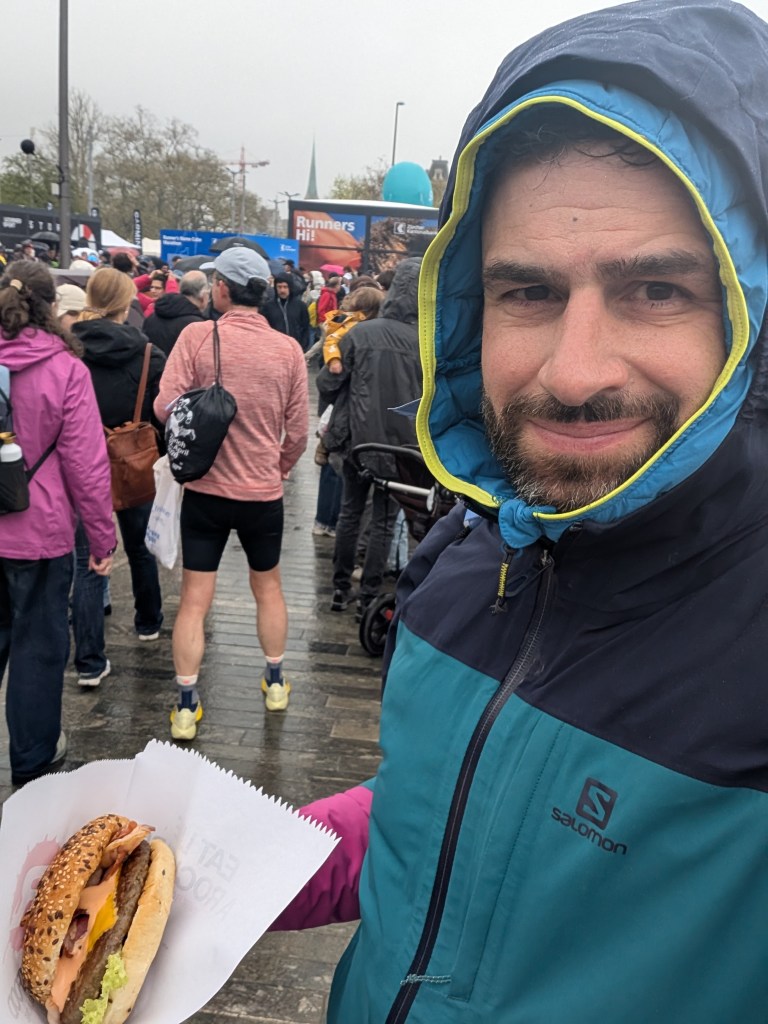
Somewhere around kilometre 35, the experiment ended.
DNF.
Again.
And unlike earlier in my endurance career, I didn’t find the experience particularly inspiring.
There was a time when I could romanticise showing up underprepared, pushing through discomfort, and discovering what happened. It felt adventurous, spontaneous, and occasionally heroic.
Now?
Not so much.
I’m getting too old for that.
Not too old to race hard, take risks, or chase ambitious goals. But too old to knowingly stand at a starting line without adequate preparation and then act surprised when things fall apart.
There is a difference between courage and poor preparation.
Zurich made that quite clear.
And with Cascais approaching, I had no particular desire to repeat the experience.
The six-month Ironman build that wasn’t quite an Ironman build
So I started planning. Properly.
Or at least as properly as my life would allow.
The training plan became an exercise in constraints and compromises. Swimming whenever possible, cycling commutes wherever practical, rebuilding running durability without overloading the legs, and trying to maintain something resembling a reasonable balance between work, family, and recovery.
I had big rides in mind, including adventures from Chur towards Saas-Fee and Geneva. These are exactly the kinds of training sessions I love: long days, changing landscapes, a destination, and the occasional moment where you wonder whether the route planner has a personal grudge against you.
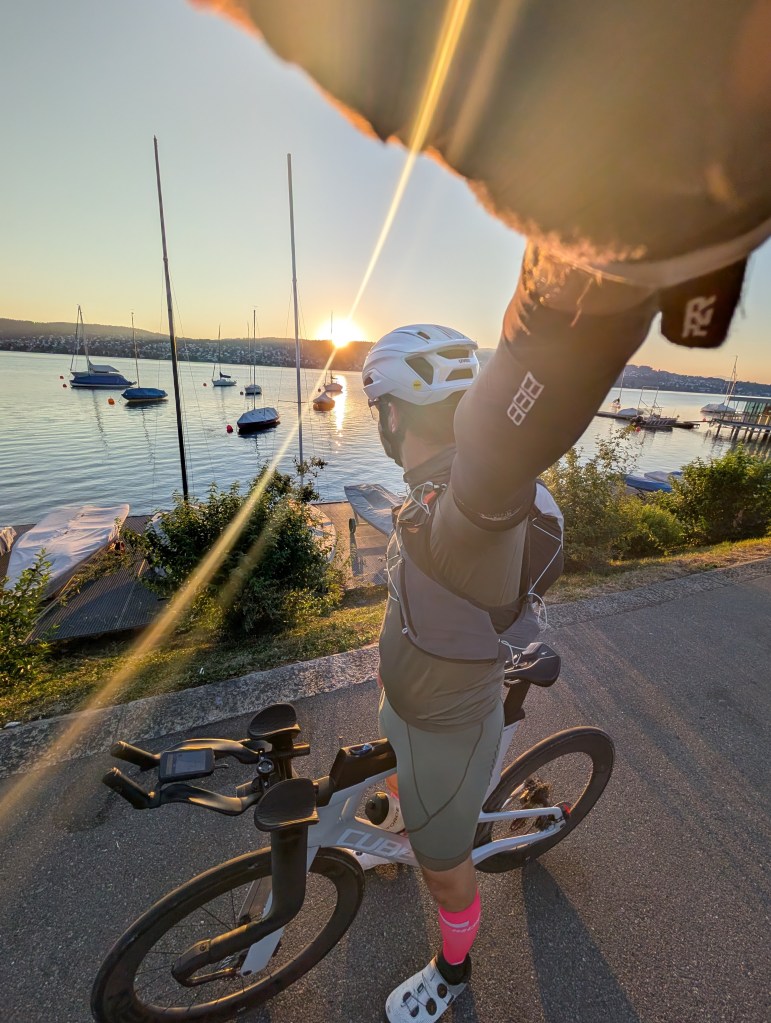
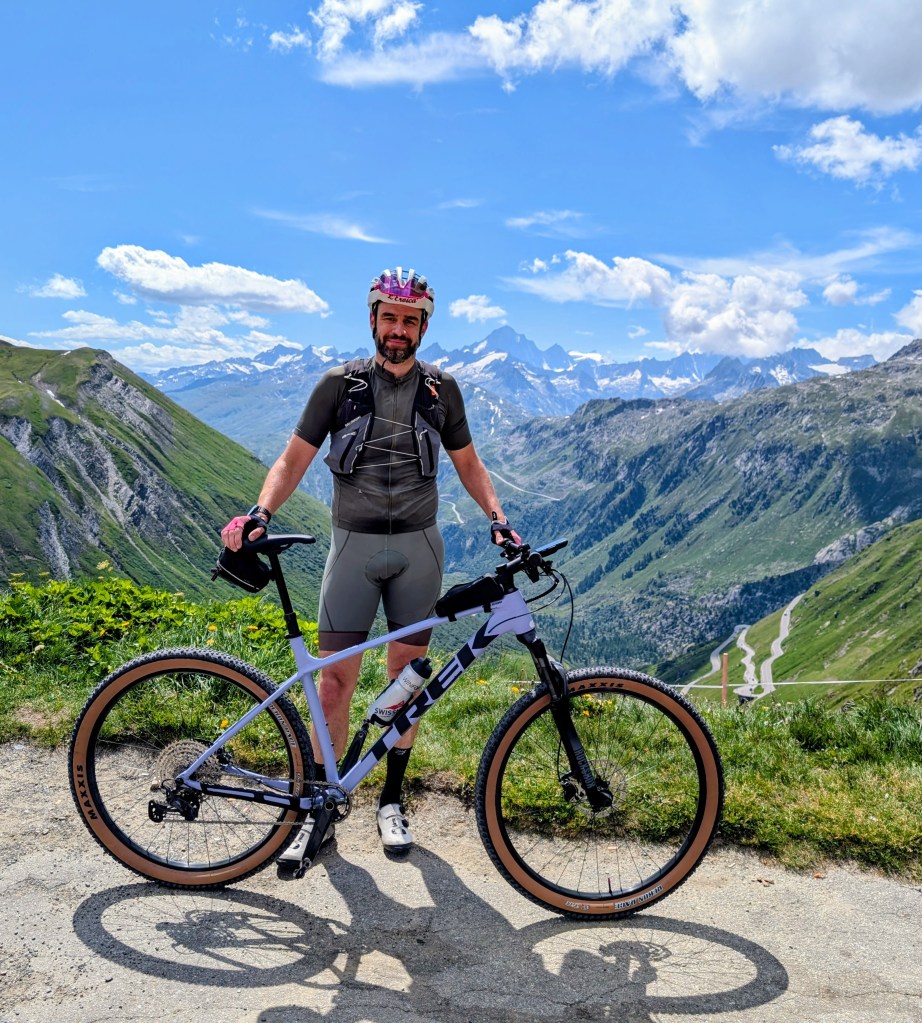
But the overall preparation was considerably less impressive than the SWISSMAN build.
My estimated FTP had slipped from around 316 W to approximately 250 W. At 87 to 88 kg, that wasn’t exactly the performance profile of an aspiring professional triathlete.
Swimming remained my reliably mediocre discipline. Running was the obvious weak point, despite being the one that had already caused trouble in Zurich.
By race weekend, I had accumulated roughly 250 hours of training by my own reckoning, spread across an abbreviated build of about six months. Running accounted for barely 31 hours.
Yes. Thirty-one hours.
Across most of a year.
For an Ironman that ends with a marathon.
Excellent preparation, clearly.
But there was a fundamental difference compared with Zurich: this time I wasn’t pretending I had done more than I actually had.
I knew the limitations. I had a realistic race strategy, a reasonably good cycling base, and enough endurance experience to understand that pacing and nutrition would matter considerably more than youthful enthusiasm.
The objective was no longer to discover how much suffering I could endure.
It was to arrive prepared enough to execute a sensible race.
And to do so within the available time, rather than sacrifice everything else to produce an impressive training log.
Meanwhile, the professional world kept spinning
Unfortunately, the rest of life didn’t pause while I trained.
At INFICON, we’re still navigating a substantial organisational transformation. We’re trying to build a faster, more collaborative, and more effective R&D organisation while simultaneously supporting existing products, delivering new developments, and keeping everyday engineering problems under control.
A wonderfully straightforward assignment.
I’ve often described it as repairing the hull while steering the ship.
Occasionally, we also discover that the people responsible for the repairs disagree about where the holes are.
We’ve made progress. Responsibilities are becoming clearer, new ways of working are taking shape, and important structural problems are finally being addressed.
But the pace is frustratingly slow.
There are still too many dependencies, too much work competing for limited capacity, and too many situations where we can describe the problem in impressive detail without actually moving towards a solution.
I’m not exempt from that criticism.
Leadership isn’t just about identifying what’s wrong. It’s about creating the conditions in which people can do something about it. And sometimes I still spend far more time coordinating, explaining, and resolving friction than actually moving things forward.
It’s demanding, intellectually stimulating, occasionally deeply frustrating, and very difficult to switch off.
I’ve become increasingly aware of how much emotional energy I invest in the organisation, sometimes to the detriment of everything else.
I care about the people, the products, and what we’re trying to achieve. But caring doesn’t automatically mean that every problem needs to become my personal burden.
That’s something I’m still learning.
And it’s probably no coincidence that long bike rides have become such an important counterweight.
At work, problems are rarely solved simply by putting in more effort. On a bike, at least, more watts usually produce a fairly predictable result.
A refreshingly honest system.
Autumn: Apparently, recovery is for other people
September and October then turned into a particularly interesting experiment in calendar management.
First came the Certified AI-Empowered SAFe Release Train Engineer course in Wiesbaden. Three intense days, fascinating discussions, excellent people, and plenty of new ideas about improving planning and coordination across complex organisations.
Naturally, I returned with even more things I wanted to change.
Exactly what my calendar needed.
Then, in early October, I crossed the Atlantic for a visit to our colleagues in Syracuse and the IMD/MIT Sloan Driving Strategic Innovation programme in Boston.
Another fascinating experience, surrounded by interesting people from different industries and backgrounds, challenging assumptions about strategy, innovation, and leadership.
There was even some time for running and cycling through the beautiful autumn scenery of the northeastern United States.

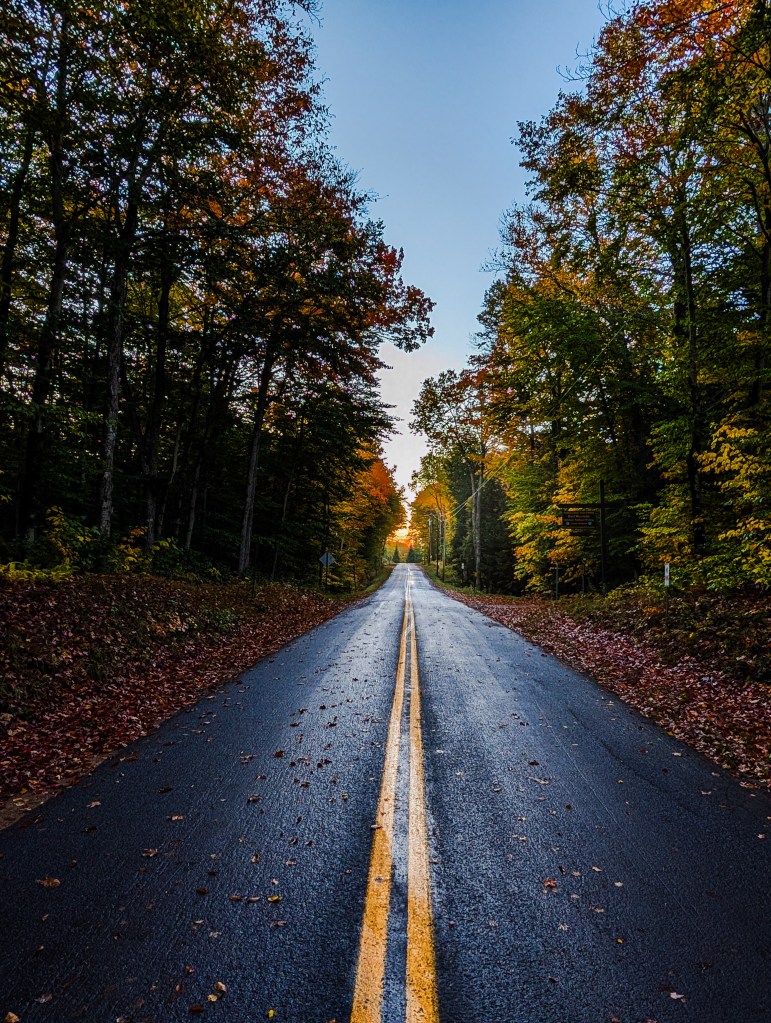
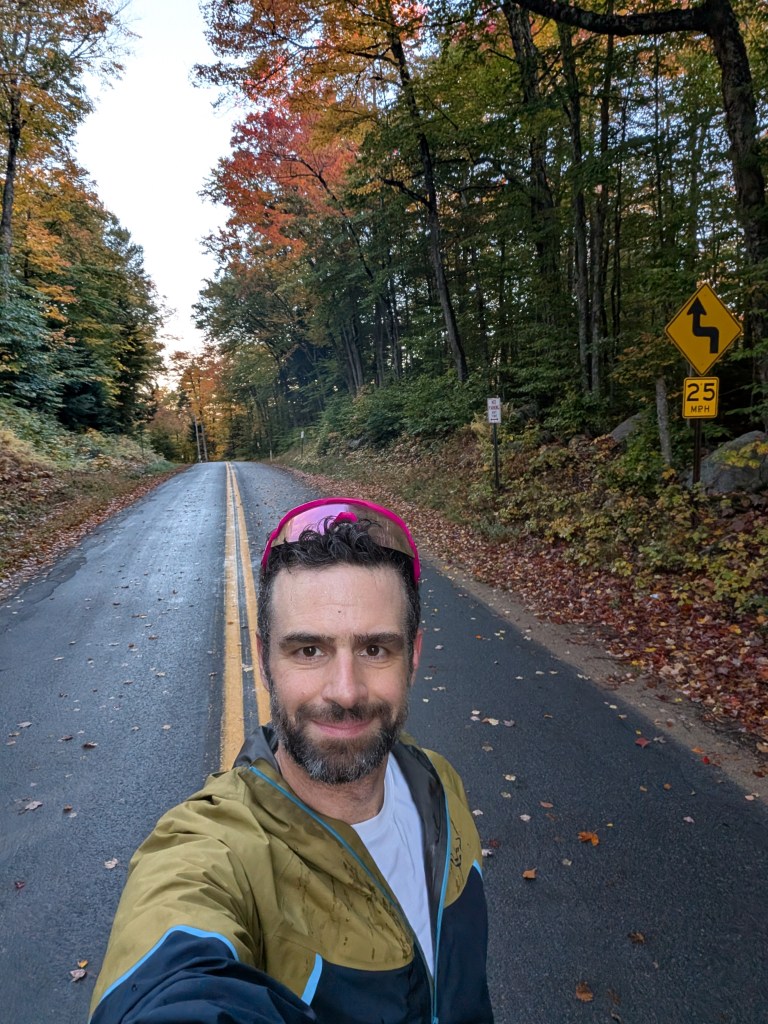
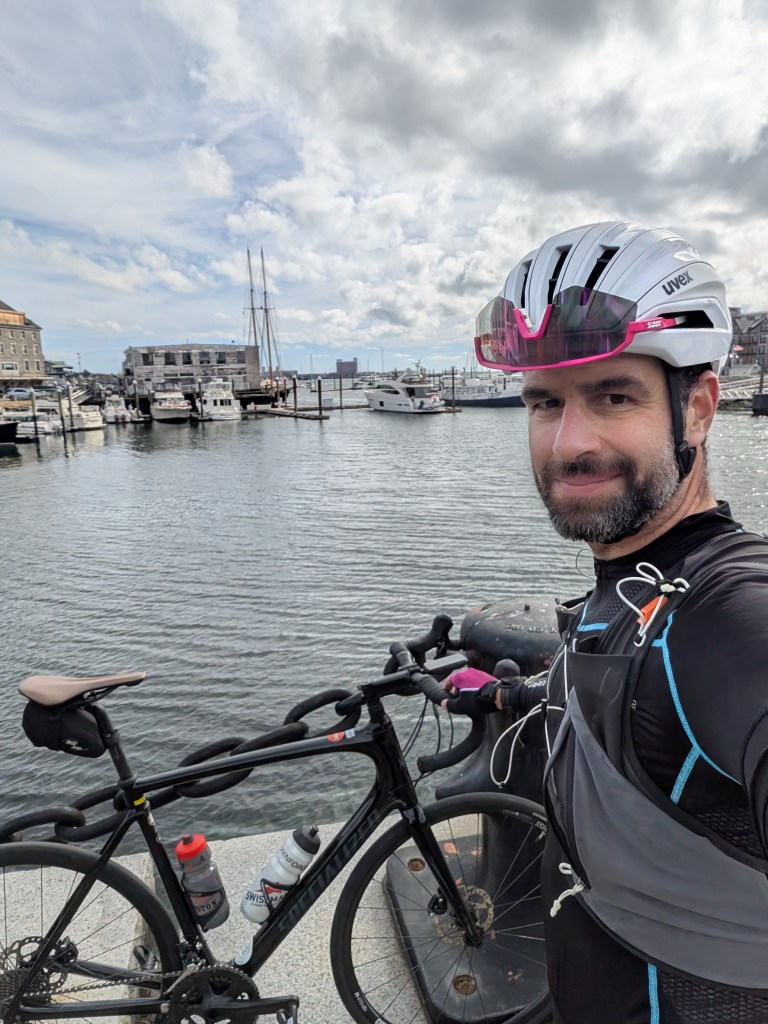
Because apparently I cannot travel anywhere without investigating the local endurance infrastructure.
All worthwhile, absolutely.
But there was one small detail.
IRONMAN Cascais was less than two weeks away.
And my supposedly carefully designed taper included international travel, professional commitments, executive education, time-zone changes, and a growing accumulation of sleep deprivation.
Textbook preparation.
Just not necessarily from a textbook about sports physiology.
Lisbon, Cascais, and the family logistics championship
By this point, Cascais had evolved from a personal sporting ambition into a family holiday with an Ironman embedded somewhere in the middle.
Flights were booked, but not necessarily the same flights. Our schedules were split, with different travel dates and responsibilities.
I spent the first part of the Portuguese holiday with the kids, exploring Lisbon and its surroundings.
Trams, sightseeing, the aquarium, public transport adventures, and the usual family negotiations about walking distances, food, and what constitutes an acceptable sightseeing programme.
It was wonderful, actually.
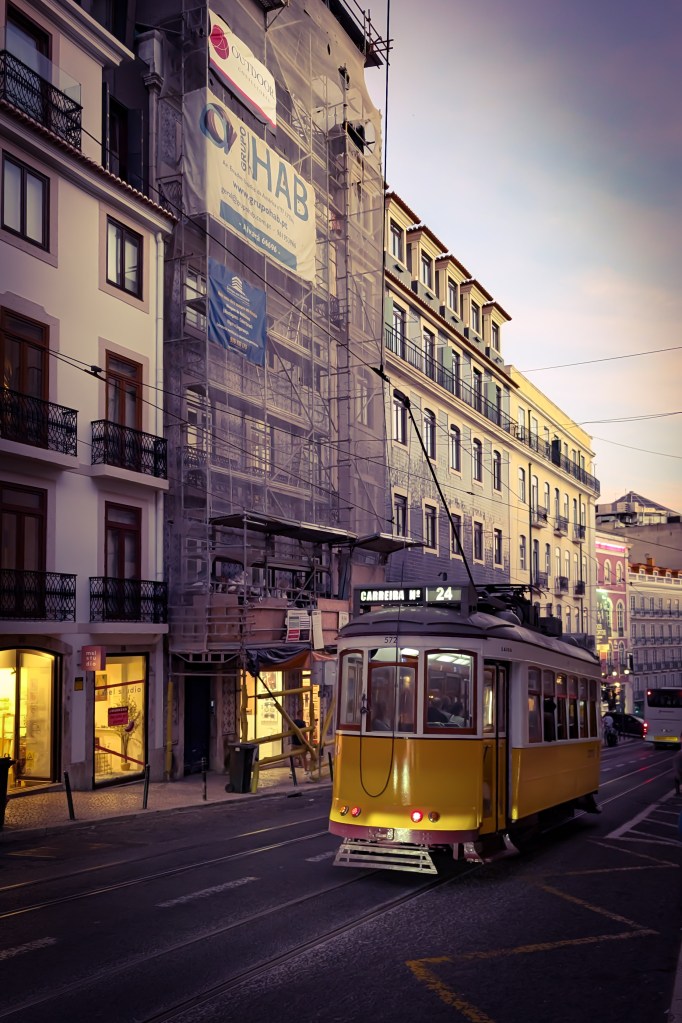
Travelling with the children is a very different kind of adventure from disappearing alone into the mountains on a bike. Less predictable, occasionally louder, and considerably more rewarding in ways that don’t show up on Strava.
Still, the arrangement had an interesting side effect.
My wife and I had only four overlapping days in Portugal.
One of those was race day.
An impressive achievement in calendar optimisation.
I am beginning to suspect that organising our family logistics has become more complex than some of the engineering programmes I manage at work.
And the uncomfortable truth is that these endurance adventures don’t just consume my time.
They consume family time.
They require flexibility, patience, planning, and a willingness from everyone else to accommodate something that is, fundamentally, my personal ambition.
Yes, we turned Cascais into a family holiday, and yes, there were wonderful shared experiences.
But that doesn’t magically make an Ironman a family activity.
On race day, I still disappear for twelve hours.
And my wife is still one of the people who makes an enormous part of this possible.
I have become increasingly conscious that the training, the anticipation, and the adventure are things I enjoy immensely, while the logistical and emotional costs are shared.
Some proper couple time is definitely overdue.
Preferably without a wetsuit, bike bag, or mandatory 5 a.m. alarm.
October 17: Finally, an actual Ironman
And then, after months of planning, improvising, travelling, occasional doubts, and a great deal of logistical creativity, race day arrived.
Suddenly, there was nothing left to organise.
Just a very long day of moving forward.
The Atlantic wasn’t particularly welcoming. The swim was choppy, and my dreams of gliding effortlessly through 3.8 kilometres quickly gave way to the more familiar reality of negotiating with saltwater.
Swim: 1:35:44.
Not exactly Michael Phelps territory, but I emerged with all essential body parts accounted for, and that was a perfectly acceptable start.
Then came the bike.
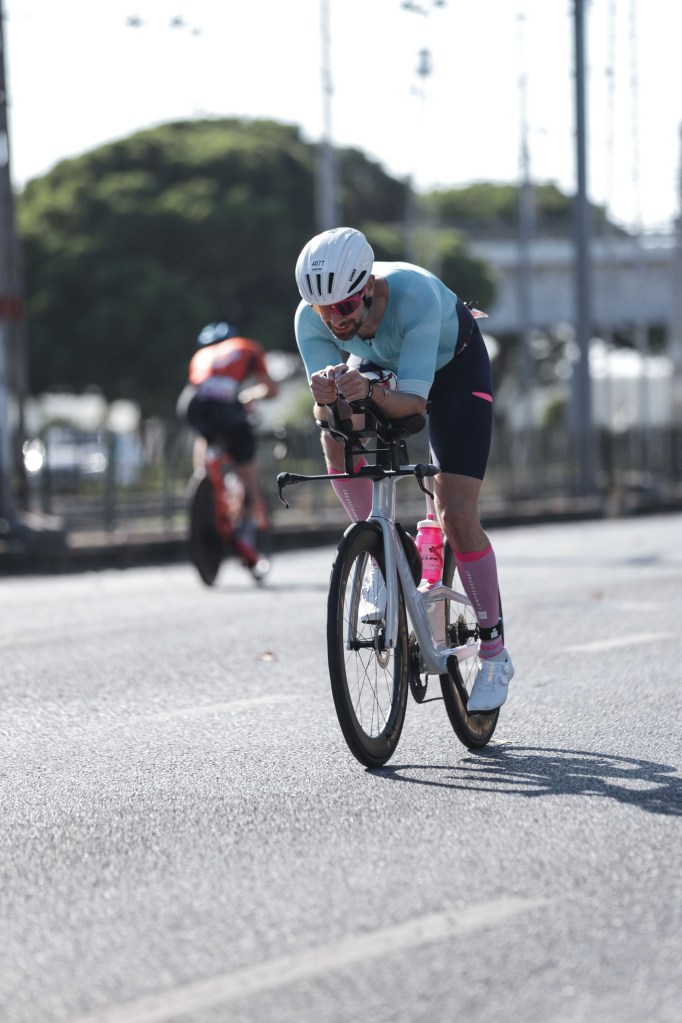
179 kilometres along the Portuguese coast, with plenty of wind to remind me that aerodynamic equipment doesn’t negotiate with meteorology.
The Aerium finally had its moment.
After months of delays, endless calculations, mental aero training, and a slightly obsessive interest in colourful accessories, I was actually riding my childhood dream in an Ironman.
And it worked.
Bike: 6:12:35.
Not spectacularly fast. Not disappointingly slow. Just solid, controlled riding, trying not to spend energy I would desperately need later.
Which brings us to the marathon.
The discipline I had approached with the greatest concern, the discipline that had already ended my Zurich Marathon unceremoniously, and the discipline for which I had accumulated a truly underwhelming amount of specific training.
Somehow, it worked.
I started running, kept running, and continued to run for considerably longer than my preparation might have suggested was reasonable.
The final ten kilometres were tough. Very tough. The sort of tough where you start mentally negotiating distances in terms of remaining aid stations rather than kilometres.
But unlike Zurich, the wheels never completely came off.
Run: 4:02:31.
A four-hour marathon after swimming 3.8 kilometres and cycling almost 180.
On roughly 31 hours of running preparation across the year.
I would not recommend this as a universal training methodology.
But I’ll take it.
Twelve hours, nine minutes and forty seconds
| Discipline | Result |
|---|---|
| Swim (3.8 km) | 1:35:44 |
| Bike (179 km) | 6:12:35 |
| Run (42.2 km) | 4:02:31 |
| Overall, including transitions | 12:09:40 |
I had vaguely hoped that a twelve-hour Ironman might be possible.
And there it was.
Nine minutes and forty seconds away.
Naturally, the data nerd in me immediately started calculating where those nine minutes might have gone. A slightly faster swim? A little more power on the bike? Less time in transition? Better running fitness?
There were plenty of opportunities, and there always will be.
But the rather more important fact is that I’m genuinely happy with how I executed the race.
I didn’t have a perfect build. I didn’t magically recover my old cycling power. I certainly didn’t turn myself into a strong runner.
Yet I had a plan, largely respected it, managed the effort, and finished in a condition that was entirely consistent with my preparation.
For once, the ambition and the execution were reasonably well aligned.
And yes, becoming an Ironman felt good.
Not quite the overwhelming emotional release I had experienced, or perhaps expected, after years of chasing SWISSMAN. More a quiet satisfaction that I had finally completed the classic distance, managed it sensibly, and could add another chapter to a long history of endurance adventures.
Three years. A DNF, a SWISSMAN finish, and now an Ironman finish.
Not bad.
But something has changed
And this is perhaps the more interesting part.
I’ve been doing endurance sports for a long time now. Trail running, mountain biking, road cycling, triathlons, multi-day adventures, and occasionally races that a more sensible person would categorise as unnecessary.
Some of my earliest endurance experiences were about exploring what was possible.
How far could I go? How much discomfort could I tolerate? Could I keep moving when every part of me wanted to stop?
There was something intoxicating about discovering those boundaries.
For years, race results were almost secondary to the experience of pushing into genuinely unknown territory.
SWISSMAN was part of that journey.
I chased that finish for years, through failed attempts, setbacks, illness, and a substantial investment of time and energy.
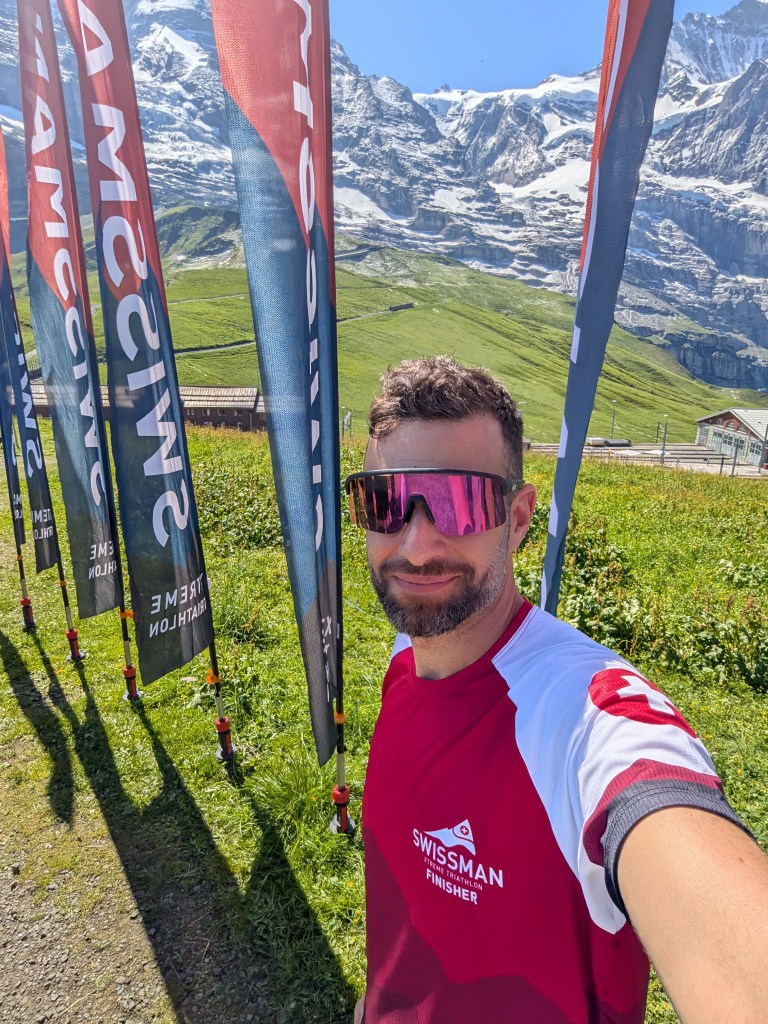
Finishing it in 2025 meant a great deal, not because of the finisher shirt – although I wore it proudly also for my Ironman finish, but because of everything that had happened before it.
Cascais was different.
I knew I could cover the distance. The challenge was to manage it properly, avoid catastrophic pacing errors, fuel consistently, and keep my legs and mind reasonably cooperative for twelve hours.
And I did.
But somewhere along the way, I’ve started wondering whether the kind of suffering that comes from pushing beyond my limits still holds the same appeal.
I used to enjoy that confrontation.
Now I’m less sure.
Perhaps I’ve become more sensible, which would be a deeply concerning development.
Or perhaps I’ve simply accumulated enough endurance experiences to know that suffering, by itself, isn’t particularly meaningful.
I no longer need a race to prove that I can endure discomfort.
That doesn’t mean I want to stop competing. Quite the opposite.
But perhaps I need to reconsider what I actually enjoy about it.
The adventure was never just the race
Looking back, some of my strongest memories aren’t from finish lines.
They’re from training.
Long, solitary bike rides through the Alps. Early mornings when the world is still asleep. Mountain passes, unfamiliar roads, and the wonderful freedom of having an entire day with nothing to do but move forward.
I love the anticipation.
Planning a route, studying the elevation profile, wondering whether a particular combination of roads and trails is achievable. Packing food, checking the weather, and setting out before sunrise.
I even enjoy the data.
Obviously.
I’m not about to abandon Strava and start embracing a mysterious, unmeasured relationship with physical activity.
Let’s not become unreasonable.
But what I value most about those experiences isn’t necessarily the training effect.
It’s the solitude, the independence, the scenery, and the sense of adventure. And perhaps, occasionally, the luxury of spending a few hours being responsible for nothing more complicated than keeping myself moving in the right direction.
There’s a fairly obvious connection to professional life here.
At work, my days are filled with decisions, meetings, dependencies, and problems that rarely have a straightforward solution.
On a long bike ride, things are refreshingly simple.
Keep pedalling, eat something, find the next mountain pass, occasionally question your route selection, and repeat.
No organisational chart required.
Perhaps that’s why these adventures have become so important.
And perhaps that’s also why turning every adventure into a race preparation has started to feel slightly counterproductive.
The recovery that hasn’t quite happened yet
Returning from Cascais was rather less dramatic than preparing for it.
No extended period of reflection on a Portuguese beach. No glorious two-week recovery retreat.
Just back to the office, where most of the problems had very politely waited for my return.
Some had even reproduced.
Physically, the Ironman was still in my legs. Sleep deprivation hadn’t magically disappeared either. Mentally, however, the holiday, the racing, and the recent educational adventures had provided some welcome distance.
I returned with fresh ideas and a little more perspective.
The difficult part is keeping that perspective once everyday reality takes over again.
There is still a lot to do professionally. Our organisational transformation remains incomplete, the workload remains substantial, and I’m fully aware that some foundational problems need much more attention.
Persistence is required.
Again.
But I’m trying to become more deliberate about where I invest my energy.
Not every problem is mine to solve personally. Not every delay needs to become a source of frustration. Not every ambition deserves the same priority.
That last point applies equally well outside the office.
And what about the people who make all this possible?
One thing that has become increasingly apparent over these three years is how much of these adventures depends on my family.
Not simply because they tolerate my training, but because family life continues while I’m busy turning myself into a very tired person in expensive sports equipment.
There are children to look after, daily routines, school activities, holidays to organise, and a dog who has absolutely no interest in my training load.
My wife carries a substantial part of that reality.
And I don’t think I always appreciate it sufficiently in the moment.
The Portugal trip was wonderful, but it also illustrated the absurdity of trying to fit everything into an already crowded calendar.
We managed family sightseeing, separate travel schedules, an Ironman, a few overlapping days together, and an impressive amount of logistics.
It worked.
But just because something works doesn’t necessarily mean it was optimally designed.
Perhaps the next adventure shouldn’t require quite so many spreadsheets.
Perhaps it should involve spending more time together.
And perhaps I should remember that the children are growing up considerably faster than my FTP is improving.
We’ve already enjoyed trekking in the Pyrenees as a family, and those experiences have stayed with me. For the next adventure, Bretagne is increasingly appealing.
The coastal paths, the Atlantic, the changing weather, small villages, and the possibility of spending several days exploring together without needing to optimise every kilometre.
No race clock, no timing chip, no carefully calculated power targets. Just the family, backpacks, and a coastline waiting to be explored.
Although I suspect I’ll still track the elevation gain.
Some habits are permanent.
2027: Another race, another goal, or something different?
And so, naturally, the question arises.
What’s next?
There is still one particularly irritating number sitting somewhere in the back of my mind.
2:59:59.
A sub-three-hour marathon.
A goal I’ve carried around for years.
I’ve often thought of the marathon as the longest sprint in endurance sports. Not literally, of course, but compared with an Ironman, it’s a very different proposition.
There’s no carefully managed twelve-hour energy budget. No prolonged effort where the primary objective is to avoid ruining the final discipline.
For someone chasing a sub-three, it’s a sustained, uncomfortable, uncompromising effort. You either have the preparation and the legs, or you don’t.
And after my recent experiences, that sounds strangely appealing.
A proper running block. A specific target. A race where I can actually push hard rather than spend half the day carefully managing the remaining energy.
On the other hand, a sub-three marathon would require a significant change in training priorities.
At my current weight, with my running history and the amount of time available, it would be anything but a casual project.
And it would inevitably compete with other things I value.
Family, professional development, adventures that don’t involve race numbers, and occasionally doing absolutely nothing.
So I’m not rushing to fill the calendar.
For once, I’m allowing the question to remain open.
Do I still want another big endurance challenge? Probably.
Do I need another Ironman next year? Probably not.
Would I enjoy chasing a fast marathon? Possibly very much.
Would I enjoy trekking along the Brittany coast with my family even more? Quite possibly.
And maybe that’s where the real decision lies.
Three years, three lessons?
Looking at 2024, 2025, and 2026 together, it’s tempting to construct a neat progression.
2024: Failure.
2025: Persistence pays off.
2026: Preparation, execution, success.
A perfectly marketable motivational story.
Unfortunately, real life is rarely that linear.
The SWISSMAN DNF in 2024 wasn’t simply a failure of character or determination. The finish in 2025 wasn’t just the result of stubbornness. And Cascais in 2026 wasn’t proof that everything can be achieved with sufficiently sophisticated planning.
Each year involved a different combination of preparation, constraints, decisions, circumstances, and occasionally plain luck.
What has changed is perhaps less my ability to endure and more my understanding of what makes an ambitious goal worthwhile.
In 2024, I still believed that wanting something badly enough might compensate for some of the missing preparation.
In 2025, I learned again that persistence matters, but only if it is accompanied by the actual work required to create the conditions for success.
And in 2026, I started appreciating that intelligent restraint can be just as valuable as the ability to push harder.
That’s also a lesson I’ve been learning professionally.
We’re trying to build an organisation capable of delivering more, moving faster, and becoming more effective. But simply asking people to work harder isn’t a strategy. Neither is constantly adding more priorities to an already overloaded system.
Progress requires deliberate choices, realistic capacity, clear direction, and the patience to build something sustainable.
Apparently, the same applies to endurance sports.
And perhaps to life in general.
The uncomfortable part is that making deliberate choices also means accepting what you won’t do.
You cannot optimise everything simultaneously.
Not fitness, career, family time, sleep, adventure, personal development, and an ever-expanding collection of interesting projects.
Something eventually has to give.
And I’d rather make that choice consciously than discover it through another DNF, chronic exhaustion, or a family calendar that looks like a failed logistics experiment.
So, where am I now?
Three rather eventful years.
2024: SWISSMAN DNF.
2025: SWISSMAN finisher.
2026: IRONMAN Portugal finisher, 12:09:40.
A beautiful time trial bike that finally exists outside my imagination.
A body that has once again demonstrated a surprising ability to endure questionable decisions.
A professional life that remains challenging, stimulating, occasionally frustrating, and far from settled.
A family that deserves more of my attention than the leftover capacity after everything else has been scheduled.
And a growing suspicion that the next chapter shouldn’t simply be a bigger version of the previous one.
I’m proud of what I’ve achieved.
I’m also tired.
Not defeated. Not burnt out by endurance sport. Just conscious that the past three years have contained an awful lot of moving parts.
There are things I want to improve professionally. There are adventures I want to share with my family. There are mountains I want to ride, trails I want to run, and places I want to explore.
And there is still that slightly ridiculous sub-three-hour marathon goal.
We’ll see.
For now, the training plan can remain a little less ambitious. The bike will still be ridden, the data will still be collected, and sooner or later another stupid idea will almost certainly find its way into a spreadsheet.
But perhaps next time, before hitting the registration button, I’ll ask a slightly different question.
Not just:
Can I do this?
But:
Is this how I want to spend the time it takes to get there?
After all, the real challenge might no longer be proving that I can keep going.
It might be learning when, where, and why I actually want to.
Challenge accepted.
Although perhaps not immediately.


Schreiben Sie einen Kommentar